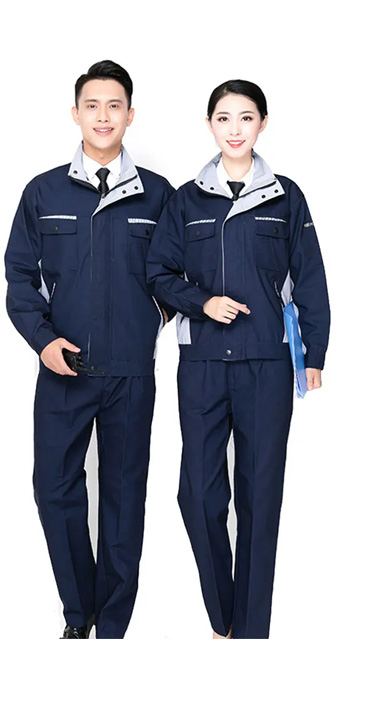
Organizations that invest strategically in customized uniform apparel consistently outperform those that treat workwear as a commoditized expense. Research from the Journal of Brand Management indicates that branded employee apparel generates over 3,400 impressions per garment per year—making uniforms one of the highest-ROI marketing channels available to B2B decision-makers. Yet beyond marketing value, customized uniform apparel delivers measurable operational benefits that directly affect the bottom line. This article examines the evidence-based case for investing in quality customized work apparel.
The most frequently cited justification for customized uniform apparel is brand exposure. Every employee becomes a walking billboard when they wear branded workwear. The Advertising Specialty Institute (ASI) ranks apparel as the top-performing promotional product category by retained impressions—averaging 6,700 impressions per garment annually at a cost of fractions of a cent per impression.
Compared to digital advertising CPMs ($5–$25 per thousand impressions), branded workwear achieves effective CPMs of $0.20–$1.50—a 10x to 100x cost advantage. For businesses in service industries—healthcare, logistics, retail, hospitality—where employees interact directly with customers, this continuous brand exposure is particularly valuable.


Studies in organizational psychology consistently find that uniform wearing increases perceived competence and trustworthiness in customer-facing roles. A field experiment published in the Journal of Applied Psychology found that service employees in branded uniforms received 18% higher customer satisfaction ratings than equivalent employees in casual clothing.
Beyond customer perception, customized work apparel creates a sense of belonging and team identity. When employees wear matching, well-fitted uniforms, it reinforces organizational culture, reduces visible status differentials, and fosters a collective identity that supports collaboration. Survey data from SHRM indicates that 42% of employees report feeling more professional and confident when provided with quality workwear.
Customized uniform apparel serves critical safety functions that generic workwear cannot:
High-visibility workwear (ANSI/ISEA 107 certified) with custom logo embroidery maintains safety compliance while projecting brand identity.
Flame-resistant uniforms (NFPA 70E compliant) customized for specific company requirements protect workers while reinforcing safety culture.
Industry-specific workwear such as food-safe, anti-static, or chemical-resistant garments, when customized, communicate organizational commitment to worker protection.
Custom protective workwear programs that integrate safety functionality with brand identity demonstrate that a company takes both its people and its brand seriously—strengthening both worker retention and customer trust.
Centralized procurement of customized uniform apparel simplifies purchasing workflows, reduces per-unit costs through consolidated orders, and establishes consistent quality standards. Key cost advantages include:
Volume pricing – Consolidated annual uniform orders of 5,000+ units typically yield 30–50% discounts versus ad-hoc purchasing.
Standardized specifications – Pre-approved fabric, construction, and decoration standards reduce procurement time and eliminate repetitive RFQ processes.
Reduced shrinkage – Well-designed uniform programs with clear replacement schedules reduce premature garment disposal.
Simplified accounting – Predictable uniform budgets simplify cost allocation across departments and projects.
The true cost of customized uniform apparel is not the unit price—it is the total cost over the garment's useful life. Quality work apparel at 180–220 gsm with reinforced stitching can last 12–18 months under industrial laundering, while budget garments may fail within 3–6 months. A lifecycle cost analysis typically reveals that investing 30–50% more per garment upfront reduces annual uniform spend by 20–35% through extended service life.
For businesses with multiple locations or franchise operations, customized uniform apparel ensures brand consistency that customers recognize and trust. A global brand identity—achieved through standardized colors, logo placement, and garment style across all locations—reinforces brand authority and professional credibility. Survey data from Franchise Times shows that customers rate franchise locations with consistent uniforms 22% higher on professionalism than those with inconsistent workwear.
Most organizations see measurable returns within 3–6 months through reduced uniform procurement costs, improved customer perception scores, and decreased employee turnover in uniform-eligible roles. Full program ROI—including brand exposure value—is typically achieved within 12 months.
A standard work apparel rotation for five-day-per-week employees requires a minimum of 3–5 garment pieces per person: 2–3 in active rotation and 1–2 in laundry/wash cycle. For industrial environments requiring daily changes, 5–7 pieces per person is recommended.
Yes. A comprehensive customized uniform apparel program typically includes a base layer (short-sleeve), a mid layer (long-sleeve or fleece), and an outer layer (jacket or vest)—allowing climate-appropriate dressing throughout the year without sacrificing brand consistency.
Custom embroidered or screen-printed workwear programs typically require 300–500 pieces per style per color to achieve competitive pricing. Blank-stock decoration (small logo additions to existing garments) can start at 24–50 pieces with shorter lead times.
Build a business case using three data streams: marketing CPM comparison (brand exposure value), customer satisfaction delta (before/after uniform program metrics), and total cost of ownership analysis (quality vs. budget garment lifecycle cost). ASI's promotional product ROI calculator provides third-party validation for these figures.
The benefits of customized uniform apparel extend well beyond visual branding. From measurable improvements in customer satisfaction and employee confidence to significant advantages in safety compliance and long-term cost efficiency, strategic uniform programs deliver compounding returns across multiple business dimensions. For B2B procurement leaders seeking to demonstrate ROI, the combination of brand exposure value, operational efficiency gains, and employee engagement improvements makes a compelling case for investment in quality, customized work apparel.
Advertising Specialty Institute. (2024). ASI Promotional Products Impressions Study. ASI Research.
L. Gouthier et al. (2022). "The effect of employee uniform branding on customer perception: A field experimental study," Journal of Applied Psychology, 107(8), 1243–1258.
Society for Human Resource Management. (2023). Employee Apparel Programs: Impact on Workplace Satisfaction and Productivity. SHRM Research.
International Safety Equipment Association. (2023). Branded High-Visibility Apparel: Safety Compliance and Brand Identity Integration. ISEA Guidelines.
J. Porter & M. Davis. (2023). "Lifecycle cost analysis in corporate apparel procurement," Journal of Supply Chain Management, 59(3), 45–62.
FOR NEWSLETTER
Subscribe to the weekly newsletter for all the latest updates