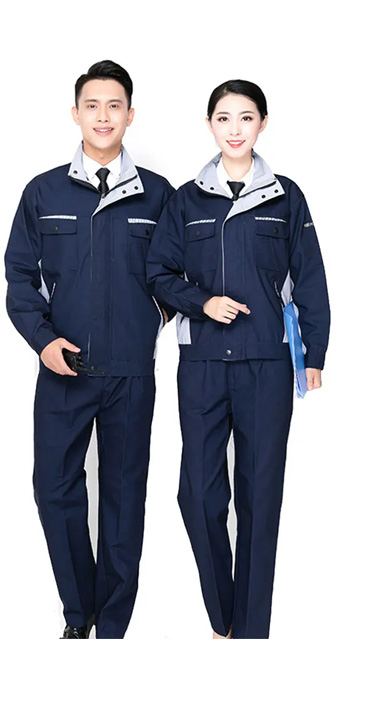
Every T-shirt begins as fabric, not as a design. The fabric choice determines the garment's feel, weight, durability, shrinkage behavior, and production feasibility. Common T-shirt fabrics include:
Ring-spun cotton: Made by twisting and thinning cotton fibers to produce a finer, stronger yarn. Ring-spun fabrics are softer and more durable than open-end cotton. Most premium T-shirts use ring-spun cotton.
Combed cotton: Cotton that has been combed to remove short fibers and impurities, producing a smoother, stronger yarn with better dye uptake. Combed cotton T-shirts are softer and more consistent in color.
Cotton-polyester blends: Typically 60/40 or 80/20 cotton/polyester. Blends resist shrinking and wrinkling better than pure cotton and maintain color brightness through repeated laundering. Preferred for workwear and corporate apparel programs.
Tri-blend: A blend of cotton, polyester, and rayon. Tri-blends have a distinctive soft, fluid drape and heathered appearance. Common in fashion and lifestyle T-shirt lines.
The T-shirt manufacturer sources fabric as greige goods (unfinished fabric) or has it woven to order based on the buyer's specification. Fabric is inspected for defects, weight (measured in GSM—grams per square meter), and shrinkage potential before cutting begins.


A pattern is a paper or digital template that defines the shape of each garment panel. The T-shirt manufacturer's pattern maker creates a master pattern based on the buyer's size specifications. Grading is the process of systematically scaling the master pattern to produce all size variations—XS through 3XL or beyond.
Modern factories use CAD (computer-aided design) systems for pattern making and grading, allowing precise, reproducible patterns that can be quickly modified. The quality of the pattern and the accuracy of grading directly determine fit consistency across sizes. A poor pattern produces poor fit regardless of how skilled the sewing operators are.
Fabric is spread in multiple layers (plies) on a cutting table—typically 50 to 200 plies depending on fabric weight and factory equipment. A cutting machine (straight knife, band knife, or CNC laser cutter) cuts all plies simultaneously following the pattern template. Precision in cutting is critical: a cut that is even 2mm off-pattern can cause mismatched seams in assembled garments.
The cut panels are bundled and tagged with a production order number that tracks them through the sewing process. Accurate cutting also minimizes fabric waste—fabric represents 60–70% of garment cost, so efficient spreading and cutting practices directly affect the final unit price.
Sewing is where the garment takes shape. A standard T-shirt passes through a sewing line with multiple stations, each performing a specific operation:
Shoulder seam joining: Front and back panels are joined at the shoulder, typically using an overlock (serger) or coverstitch machine.
Collar attachment: The neckband is attached to the body using a specialized binding or coverstitch machine. Collar construction significantly affects how the T-shirt fits and hangs.
Side seam sewing: The body panels are joined from armpit to hem, completing the cylindrical body of the T-shirt.
Sleeve attachment: Sleeves are set into the armhole—a technically demanding operation that affects the T-shirt's range of motion and visual appearance.
Hem finishing: The bottom hem and sleeve hems are finished using a coverstitch or double-needle stitching for a clean, durable appearance.
Modern sewing lines use a combination of specialized machines: overlock machines for raw edge containment, coverstitch machines for hemming and collar attachment, and flatlock machines for decorative or performance seams. The number of operators and the line speed depend on the complexity of the garment and the factory's efficiency systems.
After sewing, the garment enters finishing. Loose threads are trimmed, buttons or other hardware are attached, and labels are sewn into the neck or side seam. The finished T-shirt is then typically washed to remove sizing chemicals from the fabric and to stabilize the garment against shrinkage in subsequent home laundering.
Specialty finishing processes include garment dyeing (dyeing the completed garment rather than the fabric, producing a softer hand and unique color depth), enzyme washing (for a softer, peach-skin feel), and stone washing (for a worn, vintage appearance). These processes are added cost but produce differentiated products that command premium retail pricing.
Every production lot undergoes quality inspection before packing. The T-shirt manufacturer's QC team checks each garment against an approved sample for: seam integrity, stitch quality, measurement consistency (length, width, sleeve length, neck opening), color consistency across the batch, and surface defects (yarn irregularities, staining, printing defects). Defective garments are marked and removed; acceptable garments proceed to packing.
B2B buyers should specify the inspection standard (typically AQL 2.5 for general apparel) in their purchase agreement and request a QC report with photographic documentation before shipment.
For standard promotional or workwear T-shirts, 140–180 GSM is typical—light enough for comfort in warm conditions, heavy enough for durability and printability. Premium retail and fashion T-shirts typically use 180–220 GSM, producing a denser, more structured fabric with better draping. Very heavy weights (240+ GSM) are used for heavyweight fashion or workwear applications where structure and durability are prioritized over lightness.
From fabric procurement to finished garment ready for shipment, a standard T-shirt production run typically takes 4–8 weeks. Fabric production (if not in stock) adds 2–4 weeks. Complex decoration or specialty finishing can extend this to 8–12 weeks.
Standard blank T-shirt MOQs range from 300 to 1,000 pieces per style per color. Screen-printed decorated T-shirts typically require 300–500 minimums per design. DTG (direct-to-garment) digital printing allows orders as low as 30–50 pieces but at higher per-unit cost and with limitations on fabric types.
Request the manufacturer's size set specification and, critically, approve pre-production fit samples in every size before bulk cutting begins. Many quality issues originate in grading errors that could have been caught with a fit sample review. Specify tolerance limits for key measurements in your purchase agreement.
Yes. Most T-shirt manufacturers can produce multiple colorways from the same cut pattern within one production order, which can be more cost-effective than separate small orders. Color changes typically add minimal time to the production schedule if fabric in the required colors is available.
Understanding how T-shirts are manufactured gives B2B buyers a practical advantage in specifying products, evaluating supplier capability, and managing quality. Each stage—fabric selection, pattern making, cutting, sewing, finishing, and QC—contributes to the final product's quality and cost. A buyer who understands these stages can ask better questions, set clearer specifications, and build more productive relationships with T-shirt manufacturers.
International Textile Manufacturers Federation. (2023). World Textile Industry Overview: Apparel Manufacturing Capacity and Trends.
R. Perry et al. (2022). "Tech pack quality and sampling efficiency in apparel OEM relationships." International Journal of Clothing Science and Technology, 34(3), 389–408.
J. Freifeld. (2023). "Quality assurance frameworks in global apparel supply chains." Journal of Fashion Marketing and Management, 27(4), 512–530.
L. Chang & M. Kincade. (2023). "Supply chain risk management in custom clothing manufacturing." Journal of Manufacturing Technology Management, 34(7), 1456–1475.
McKinsey & Company. (2024). The State of Fashion: Apparel Sourcing Report 2024.
FOR NEWSLETTER
Subscribe to the weekly newsletter for all the latest updates