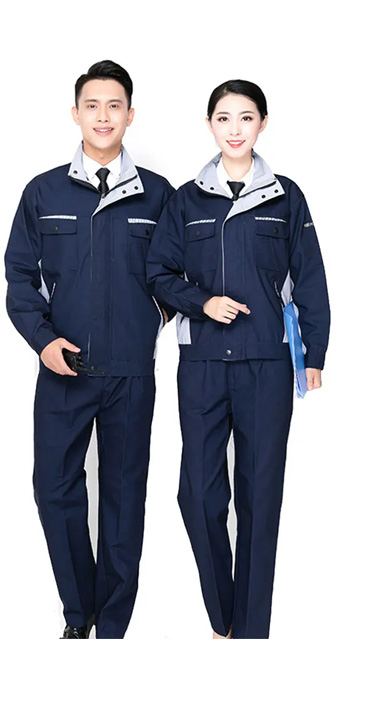
When a custom apparel manufacturer quotes an MOQ, they are telling you the smallest number of units they will produce per style per color in a single production run. Below that number, the setup cost per garment makes the order unprofitable for the factory. Above it, per-unit costs fall predictably as volume increases. Understanding this math is the first step toward negotiating apparel sourcing that protects your margins.
MOQ is not arbitrary. It reflects real cost drivers: pattern preparation, machine setup, fabric spreading and cutting, and the QC checkpoints that apply regardless of whether you order 50 pieces or 5,000. The factory absorbs these fixed costs and spreads them across the order. When volumes are low, that spread produces a high per-unit price. At scale, the same fixed cost divided across many more units produces competitive pricing.


A true OEM custom apparel manufacturing arrangement—where the factory produces from your tech pack using your fabric and trims—typically requires 500 to 2,000 pieces per style per color. At the lower end, 300–500 pieces may be accepted for basic garment constructions like unlined T-shirts or simple pullovers. The more complex the garment, the higher the floor: a lined jacket or a precision-fitted polo with specific hardware may not be viable below 1,000 units per color.
ODM apparel sourcing—where the factory offers an existing sample that you modify in color, label, or minor details—typically has lower floors. ODM MOQs commonly range from 100 to 500 pieces per style per color, because the factory is reusing existing patterns and already has the fabric in stock. This makes ODM the more accessible entry point for brands testing a new category or launching with limited capital.
The lowest barrier entry point is purchasing blank finished garments and adding your own decoration—screen printing, embroidery, or heat transfer. Blank-stock MOQs can start as low as 24 to 50 pieces per style from wholesale distributors, though per-unit costs are higher than factory-direct. This route suits B2B promotional apparel programs where volumes are modest and speed is critical.
The primary driver is machine utilization. A cutting table, a sewing line, and a finishing station all have a cost per hour whether they are running or idle. A factory needs to fill those stations with enough units to justify the setup time. Beyond that, fabric purchasing is more economical at volume—a garment supplier buying 10,000 meters of jersey gets a significantly lower rate than one buying 500 meters. Trims similarly come in bulk packs; small orders pay a premium.
A factory also manages risk. Smaller orders from many buyers consume the same production slots as large orders, but generate less revenue. Without an MOQ floor, a factory would spend disproportionate time on low-value orders at the expense of more profitable, higher-volume customers. The apparel manufacturing floor is a high Fixed-Cost business, and MOQ is the mechanism that keeps it viable.
Buyers who are new to custom apparel sourcing often assume MOQ is fixed. It is not. Negotiation is part of the process, and understanding the factory's constraints helps you ask for the right concessions:
Accept a higher per-unit price in exchange for a lower MOQ. Factories will sometimes run a small order at a premium if the unit margin compensates for the setup cost.
Consolidate across styles. If you need 200 units each of three different styles, negotiate a combined order of 600 units—giving the factory volume while you get all three styles produced.
Offer a longer-term commitment. A custom apparel supplier will often reduce MOQ for the first order if you commit to a repeat order within six months.
Choose ODM over OEM. The lower ODM MOQ gives you production access without requiring the full investment of a custom development program.
Plan for seasonality. Factories have slower seasons. Asking for a reduced MOQ during their off-peak window—often late winter or mid-summer—can unlock flexibility.
It is tempting to find the apparel supplier who will produce 100 units at a low per-unit price. But there are trade-offs worth understanding. Very low MOQ factories often cut corners on fabric quality, reduce QC checkpoints, or use less experienced sewing operators on small runs. The result is inconsistency between samples and bulk, or a higher defect rate that costs more in returns than the savings on the initial order.
Experienced apparel buyers know that the real cost of an order is not just the invoice price. It includes sampling, shipping, duties, quality issues, and the time cost of managing a problematic supplier relationship. A slightly higher MOQ from a reliable garment manufacturer often produces better total economics than the lowest-MOQ option available.
MOQ shapes what you can realistically offer. If your target market demands 12 colorways of a style but your MOQ is 300 per color, you are committing to 3,600 units to cover the full range—significant capital and risk. Understanding this dynamic early helps you design a product line that is commercially realistic. Strategies include:
Launch with one or two core colors and expand based on sell-through data.
Use ODM models for broader color range to stay within budget.
Plan a single large production run per year for hero styles, with smaller top-up runs for bestsellers.
Consider a base-garment-plus-insert model, where a blank base is produced at volume and embellished locally in different colorways.
Yes. Most factories allow you to combine styles within the same fabric family to meet the total unit count. For example, ordering 300 T-shirts and 300 polo shirts in the same color and fabric counts as 600 units—meeting many factories' per-color minimums. Confirm this with your supplier before placing the order.
The factory will typically quote at a significantly higher per-unit price, add a setup fee, or simply decline the order. Some apparel suppliers offer a "small order premium" that can add 30–60% to the unit price for orders at half the normal MOQ.
Generally yes. After establishing a working relationship, factories become more flexible on MOQ because they value the repeat business and have already absorbed the initial pattern and setup costs. Demonstrating reliable payment and clear communication accelerates this flexibility.
Usually both. The standard is "X units per style per color." If you order three colors, you multiply the MOQ by three. Some factories offer "mixed color" pricing where you reach the total per-style count across colors but do not need to hit each color minimum—confirm this explicitly.
Work backward from your target retail price. If your target retail is $40 and your target wholesale margin is 50%, your factory price must be $20 or below. Divide your total production investment (factory price plus sampling, shipping, and duties) by the unit count to get your per-unit cost. Compare that against your margin requirement. If the math does not work, either adjust the product spec or renegotiate the MOQ.
MOQ in custom apparel manufacturing is a structural feature of the production model, not a barrier to be circumvented. The buyers who succeed understand how MOQ reflects the factory's cost structure, plan their product lines around realistic production volumes, and negotiate from a position of knowledge rather than frustration. A well-structured apparel program—built on the right apparel supplier, appropriate MOQ, and honest margin math—creates sustainable supply relationships that scale with your business rather than constrain it.
McKinsey & Company. (2024). The State of Fashion: Apparel Sourcing Report 2024. McKinsey & Company.
International Trade Centre. (2023). Sourcing Guide for Apparel Buyers. ITC Publications.
J. Freifeld. (2023). "OEM versus ODM: Strategic sourcing models for private-label apparel brands." Journal of Fashion Marketing and Management, 27(2), 234–251.
H. Choi & A. Pang. (2022). "Speed-to-market in apparel supply chains: ODM and fast-fashion models." International Journal of Production Economics, 243, 108327.
R. Perry et al. (2022). "Tech pack quality and sampling efficiency in apparel OEM relationships." International Journal of Clothing Science and Technology, 34(3), 389–408.
FOR NEWSLETTER
Subscribe to the weekly newsletter for all the latest updates